For next-generation owners
Modernize the shop.
Keep what built it.
You inherited a business with a reputation, a customer list, and a system that lives in one person's head. Alter-Sync writes that system down, so it becomes the shop's instead of theirs.
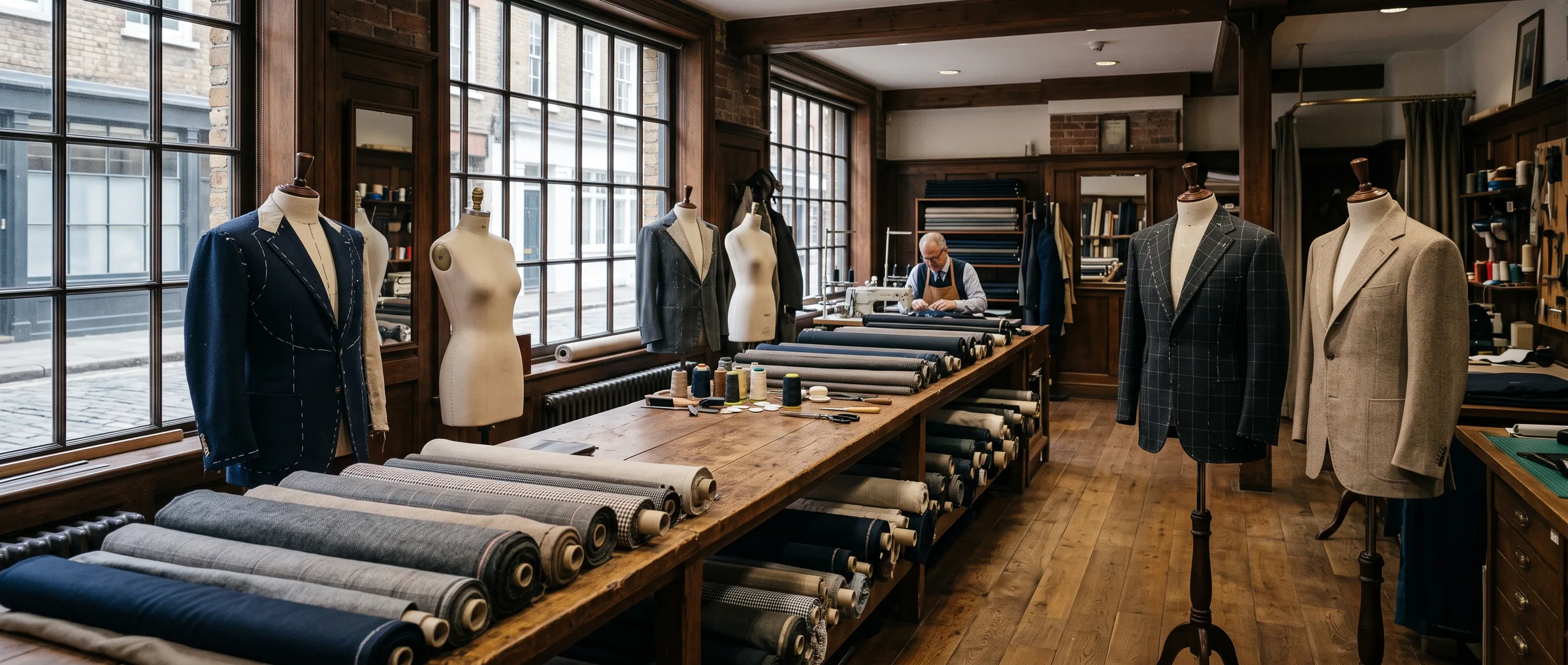
What you inherited
The process works. It just is not written down.
Your parents did not run the shop on chaos. They ran it on memory and relationships, and it worked for decades. The problem is that memory does not transfer, and relationships do not scale to a second location or a second seamstress.
No central view of the work
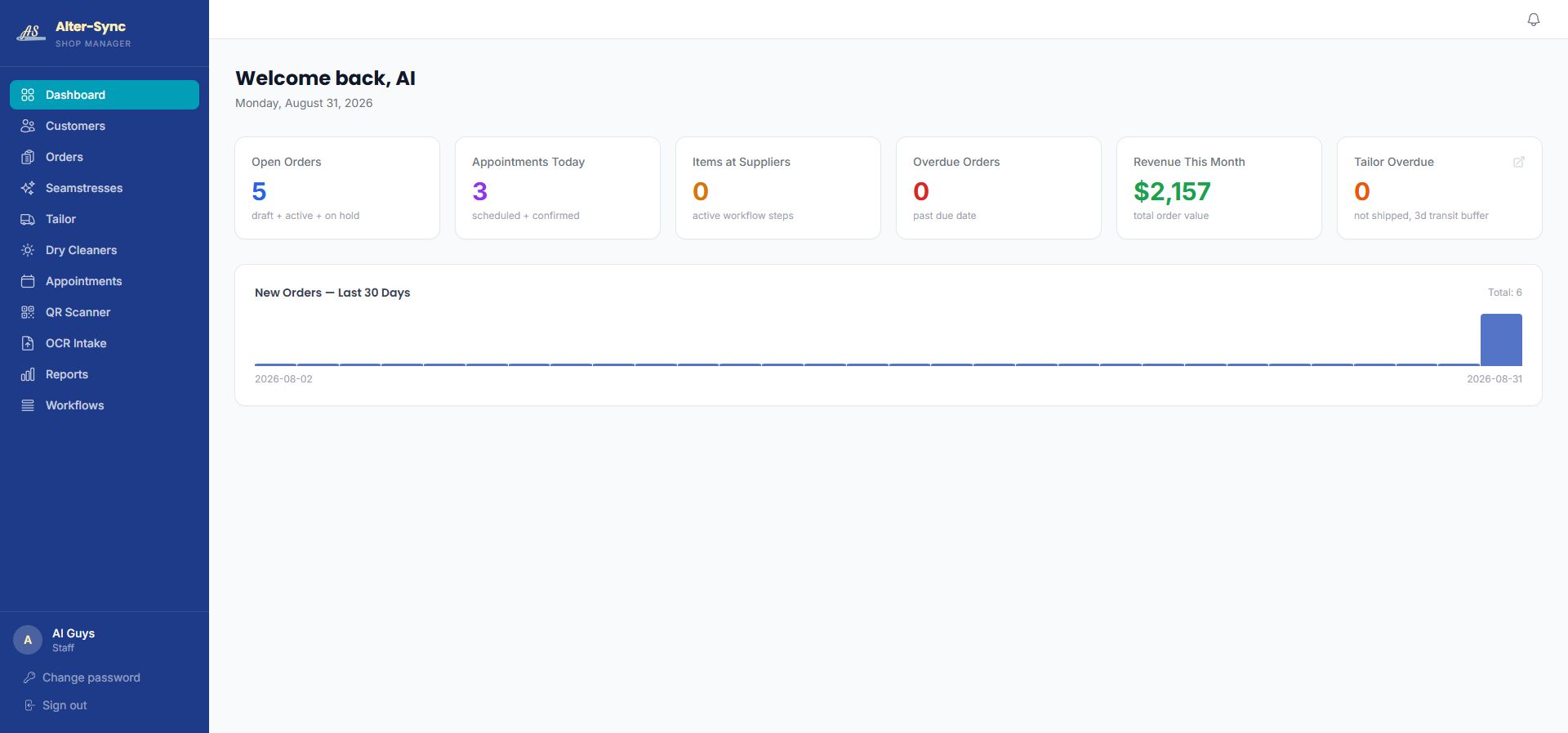
The Daily Status dashboard is the view. Open orders, appointments, overdue work, and revenue, on a screen anyone can look at.
Customer service bottlenecks
When the order record is on the garment's QR code, "where is it?" and "what did they ask for?" no longer route through one person.
Hard to delegate, hard to grow
Saved measurements, clear priorities, and a shared status are what let you hand work to someone new with confidence.
Data, clarity, repeatable process
Numbers you do not have to ask for.
You want to know how the month is going without an awkward conversation. The dashboard tells you. The reports go further, with date and status filters and a CSV download for your accountant or your own spreadsheet.
- Open, overdue, and completed orders by date range
- Revenue this month and thirty-day order volume
- Supplier workload for every seamstress or tailor you send work to
- A 1099 summary at year end
The Daily Status dashboard and reports in detail.
A demo shop's morning: open orders, appointments, overdue work, and the month's revenue on one screen.
Bringing your parents along
Show them their own process on a screen.
The way to introduce Alter-Sync to someone who sees software as risk is not to promise transformation. It is to show them the order form asks for exactly what their paper form asks for, and that the dashboard is the sheet by the door, kept current.
What stays theirs
- How they measure, fit, and finish
- The relationships with customers and the seamstress
- The paper order book, if they want to keep it beside the record
What becomes the shop's
- Where every garment is, and what the customer asked for
- Every regular customer's measurements, saved on their profile
- A picture of the month that does not depend on anyone's memory
Alter-Sync's founder built the product with a shop that had known him for thirty years. That story is the best answer to "why should we trust this?"
Questions next-generation owners ask
Before the walkthrough.
My parents are still in the shop and wary of software. How do I introduce this?
Start with the thing they already do every morning: work out what is due. Show them the Daily Status dashboard next to the sheet by the door. Then show them an order record next to a paper tag. Alter-Sync asks for the same information, in the same order. Nothing about how they measure, fit, or sew changes.
Can I see the numbers without asking?
Yes. The dashboard shows open orders, today's appointments, overdue work, and the month's revenue. Reports filter by date and status and download as CSV.
Will this help me delegate?
When the order, its instructions, and its measurements are on a record anyone can open from the garment's QR code, the answer to "where is it?" and "what did they want?" stops depending on one person. That is what makes delegation possible.
What if we outgrow it?
Your orders and measurements download as CSV from the reports. You are never locked in.
A conversation about your shop
See your shop in sync.
Bring your parents, or bring the order book. Thirty minutes is enough to see whether Alter-Sync fits the shop you are taking on.
Book a WalkthroughPrefer to talk first? Call (205) 541-0683 or email Darrell.